Are you curious about how big financial organizations streamline their operations and manage vast amounts of data efficiently? The answer often lies in SAP software.
If you’ve ever wondered what SAP software is and how it plays a crucial role in the finance sector, you're in the right place. Imagine having a powerful tool that simplifies complex financial tasks, enhances accuracy, and boosts productivity. Sounds intriguing, right?
What Is SAP Software In Finance? It is an integrated system used by organizations to manage financial processes, reporting, compliance, and real-time financial data.
Understanding SAP's impact on finance could be the key to unlocking new efficiencies in your financial processes. Stay with us as we delve into the world of SAP software and uncover its transformative potential in finance. You’ll discover how it can revolutionize the way you handle financial data and decision-making, making your work more effective and less stressful.
Sap Software Basics
SAP software is crucial in the finance sector. It helps businesses manage financial tasks efficiently. This software integrates various financial processes. It offers a unified platform for managing finances. Companies rely on it for accuracy and compliance. Understanding its core functions and key features is essential.
Core Functions
SAP software handles financial accounting. It tracks all financial transactions. This includes accounts payable and receivable. General ledger management is also part of it. It ensures data consistency across departments. Financial reporting is another core function. It provides real-time financial insights. This aids in strategic planning and decision-making.
Key Features
SAP software is known for its robust features. One key feature is automation. It automates repetitive financial tasks. This reduces human error and saves time. Integration is another important feature. It connects with other business systems. This ensures a seamless data flow. Security is also a top feature. It protects sensitive financial data. Regular updates keep the system secure.
Role In Financial Management
SAP software plays a crucial role in financial management by providing tools that streamline processes and enhance accuracy. Imagine managing your finances without endless spreadsheets. SAP software offers a solution that integrates various financial functions into one platform. This integration simplifies your tasks and improves your overall efficiency.
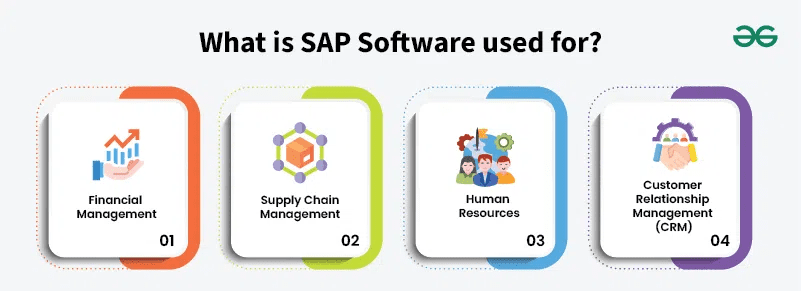
Have you ever struggled with balancing accounts or managing budgets? SAP software helps you tackle these challenges by offering comprehensive financial management solutions. It empowers you to make informed decisions, track expenditures, and optimize resources effectively.
Streamlining Processes
SAP software simplifies financial processes by automating routine tasks. You no longer have to manually enter data or reconcile accounts. This automation saves time and reduces the risk of errors.
Consider how much easier your day becomes when repetitive tasks are handled by software. SAP helps you focus on strategic planning rather than mundane chores. The automation also ensures that tasks are completed consistently and accurately.
Wouldn't you prefer to spend your time analyzing financial trends rather than inputting data? SAP software makes this possible by managing transactions, generating reports, and monitoring cash flow seamlessly.
Enhancing Accuracy
Accuracy in financial data is vital for making informed decisions. SAP software enhances accuracy by reducing human error and providing real-time data updates. This ensures that you have the most current information at your fingertips.
Have you ever made a decision based on outdated or incorrect data? With SAP, you access precise data that you can rely on. This accuracy is crucial for budgeting, forecasting, and financial analysis.
Imagine how confident you'll feel knowing your financial reports are spot-on. SAP software offers validation checks and auditing features, making sure your data is reliable and trustworthy.
Ultimately, SAP software in finance empowers you to streamline processes and enhance accuracy, leading to better financial management. How will you leverage SAP to transform your financial operations?
Benefits of SAP In Finance
SAP software streamlines financial processes, enhancing efficiency and accuracy in data management. It provides real-time insights, facilitating informed decision-making. Automating repetitive tasks reduces errors, saving time and resources.
SAP software in finance offers a powerful suite of tools designed to streamline operations and enhance financial management. Implementing SAP can transform financial processes, delivering significant advantages for businesses of all sizes. Let's explore the benefits of SAP in the finance sector.
- Enhanced Efficiency: SAP automates repetitive financial tasks, significantly reducing manual effort and minimizing errors.
- Real-Time Financial Insights: Access up-to-date financial data and analytics instantly to support fast and accurate decision-making.
- Improved Accuracy: Automated processes reduce human errors in reporting and reconciliations, ensuring reliable financial data.
- Cost Savings: Lower operational costs through automation, error reduction, and optimized resource allocation.
- Strategic Financial Management: Visual dashboards and detailed reports help identify trends and opportunities, enabling proactive and informed decisions.
- Risk Reduction: Accurate reporting and compliance features minimize audit penalties and financial risks.
- Scalability: SAP’s tools grow with your business needs, supporting complex financial operations as your company expands.
- Better Resource Allocation: Helps direct funds toward high-return activities, maximizing profitability while controlling expenses.
Integration Capabilities
SAP software in finance offers integration capabilities that streamline financial processes. It connects various financial functions, ensuring seamless data flow across departments. This integration enhances efficiency and accuracy in financial management.
Integrating SAP software into your finance operations can transform how your organization functions. The true power of SAP lies in its ability to connect various parts of your business seamlessly.
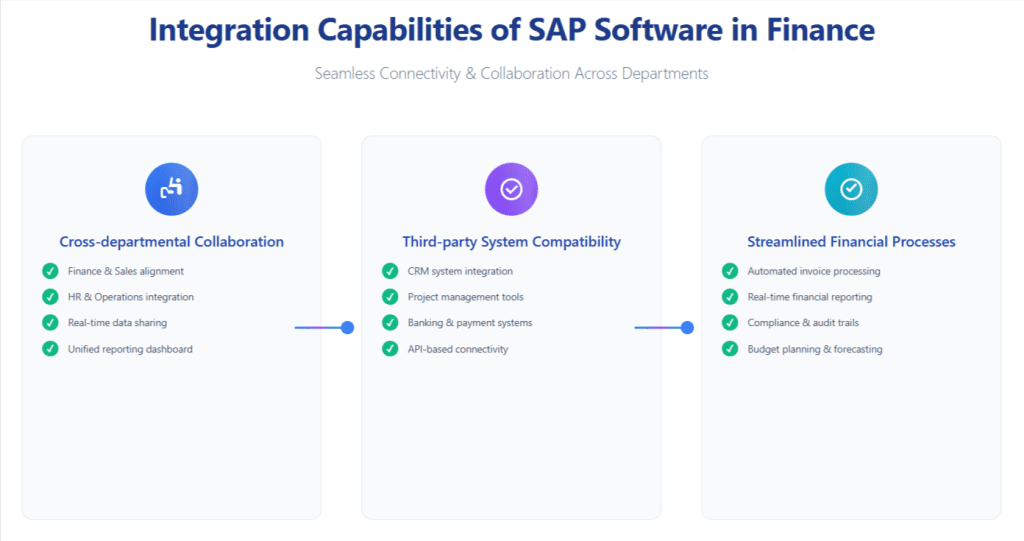
Imagine the ease of having financial data readily available for decision-making across departments. This integration capability is what sets SAP apart, helping businesses streamline processes and improve efficiency.
Cross-departmental Collaboration
SAP software enhances collaboration between different departments. You no longer have to chase down information from different teams. Finance can communicate effortlessly with sales, HR, and operations. This not only saves time but also reduces the risk of errors caused by manual data entry.
Think about the last time you needed urgent data from another department. With SAP, that data is just a click away. This ease of access fosters a culture of collaboration and transparency within your organization.
Third-party System Compatibility
SAP is designed to work well with a wide range of third-party systems. You might be wondering if your existing software can integrate with SAP. The answer is often yes. SAP's compatibility ensures that you don’t have to abandon your current tools.
Consider how integrating SAP with your CRM or project management software could enhance your workflow. This compatibility means SAP can grow with your business, adapting to your changing needs. Have you ever faced the frustration of trying to make two systems talk to each other?
With SAP, this becomes less of a hurdle, allowing you to focus on what truly matters—driving your business forward.
By embracing SAP's integration capabilities, you position your company to operate more efficiently and effectively. How could this level of integration transform the way your team works?
Sap Modules For Finance
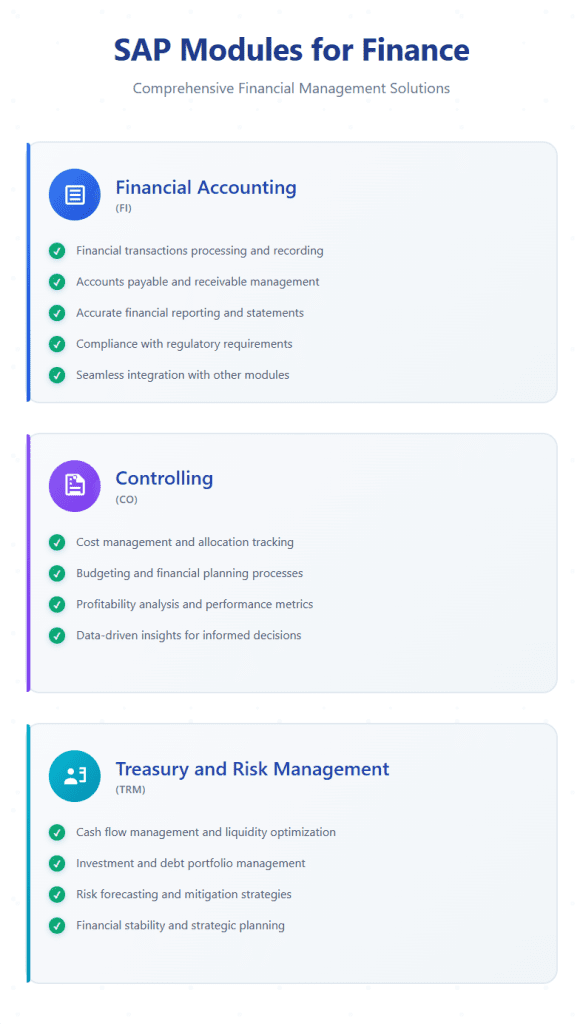
SAP software is a powerful tool in finance. It provides various modules tailored for financial management. These modules enhance efficiency and provide valuable insights for businesses. Let's explore some key SAP modules used in finance.
Financial Accounting (fi)
The Financial Accounting (FI) module is essential for tracking financial transactions. It helps in managing accounts payable and receivable. Businesses use FI to ensure accurate financial reporting. This module also supports compliance with regulations. It integrates with other SAP modules for seamless data flow.
Controlling (co)
Controlling (CO) focuses on internal cost management. It helps businesses analyze their spending and budget. CO provides tools for planning and monitoring costs. This module helps in making informed financial decisions. It supports profitability analysis and cost reporting.
Treasury And Risk Management
Treasury and Risk Management deal with financial risks. This module helps in managing cash flow and liquidity. It provides tools for investment and debt management. Businesses use it to forecast financial risks. It ensures stability in financial operations.
Implementation Challenges
SAP software in finance offers powerful tools for managing financial data. Yet, implementation can present several challenges.
| Challenge | Description | Key Considerations |
|---|---|---|
| Complexity | SAP’s numerous modules and advanced features can overwhelm new users. | Requires thorough planning and resource allocation to manage complexity. |
| User Training | Users must understand SAP’s functionalities through comprehensive and ongoing training programs. | Continuous workshops and updates boost user confidence and effectiveness. |
Complexity
SAP software in finance is known for its complexity. It includes numerous modules and features. This complexity can overwhelm users unfamiliar with advanced financial systems. Understanding all components takes time and effort. Proper planning is essential to navigate this complexity. Teams must allocate resources to manage this intricate software.
User Training
Effective user training is vital for SAP's success in finance. Users need to grasp the software's functionalities. Training sessions should be comprehensive and continuous. Regular updates and workshops can help users stay informed. Without proper training, users may struggle to use SAP effectively. Investing in training enhances user confidence and productivity.
Future Trends In Sap Finance
The future of SAP Finance is evolving with new technologies. These advancements reshape financial operations, making them more efficient. Businesses seek ways to streamline processes and increase accuracy. SAP Finance adapts to these changes, offering solutions that meet modern needs. Let's explore some key trends driving this evolution.
Ai And Machine Learning
AI and machine learning enhance decision-making in finance. They analyze vast amounts of data quickly. This helps identify patterns and predict outcomes. Automated processes reduce human error, improving reliability. Businesses gain insights that guide strategic planning.
AI tools offer real-time analytics, which are crucial for timely decisions. Machine learning algorithms continually learn and adapt. This ensures finance operations stay relevant and accurate. These technologies bring a new level of precision to SAP Finance.
Cloud Solutions
Cloud solutions offer flexibility and scalability for SAP Finance users. Data is accessible from anywhere, enhancing collaboration. Cloud platforms support remote work, a key trend in modern business. They ensure secure storage and easy retrieval of financial data.
Cloud solutions reduce costs associated with traditional IT infrastructure. They offer subscription-based models, which are cost-effective. This allows businesses to allocate resources efficiently. The integration with SAP Finance is seamless, enhancing productivity.
Cloud technology supports quick updates and upgrades. This keeps financial systems current without major disruptions. Businesses stay agile, adapting to changing market demands. Cloud solutions drive innovation in SAP Finance, paving the way for future growth.
Frequently Asked Questions
What Does Sap Do In Finance?
SAP streamlines finance by automating tasks, improving accuracy, and providing real-time data insights for better decision-making. It manages financial operations, including accounting, reporting, and budgeting, enhancing productivity and compliance. SAP's integrated systems help businesses optimize financial processes, reduce costs, and improve overall financial performance effectively.
Which Sap Is Used For Finance?
SAP S/4HANA Finance is the module used for financial management. It offers real-time insights and streamlined financial processes. Users can manage accounting, treasury, financial planning, and analysis efficiently. This SAP solution enhances decision-making and boosts productivity for finance departments.
What Exactly Is Sap Software?
SAP software is an enterprise resource planning (ERP) system. It integrates business processes like finance, sales, and human resources. Companies use SAP for efficient data management and streamlined operations. SAP enhances decision-making through real-time analytics and reporting. It supports digital transformation and scalability for diverse industries.
What Is The Sap Program Used For?
The SAP program is used for managing business operations and customer relations. It integrates core functions like finance, HR, and supply chain. SAP helps organizations streamline processes, improve efficiency, and enhance data accuracy. Businesses use it to gain real-time insights and make informed decisions.
Conclusion
SAP software in finance offers efficient solutions for businesses. It simplifies financial management and improves data accuracy. With SAP, companies can streamline processes and enhance decision-making. This software supports various financial tasks, from accounting to reporting. It helps maintain compliance and reduce errors.
Businesses can achieve better financial transparency. SAP's user-friendly interface makes it accessible to many. Its integration capabilities ensure smooth operations. Overall, SAP is a valuable tool for financial management. It empowers businesses to operate efficiently and effectively. Consider SAP for your finance needs.