A 2 hour firewall is a tested assembly with continuous protection and rated joints.
If you want 2 hour firewall construction details that pass inspection the first time, you are in the right place. I’ve spent years building and reviewing rated walls on hospitals, schools, and mixed‑use towers. Below, I break down 2 hour firewall construction details with code-backed guidance, field-ready checklists, and hard lessons learned, so you can build fast, safe, and compliant.

What a 2 Hour Firewall Really Means
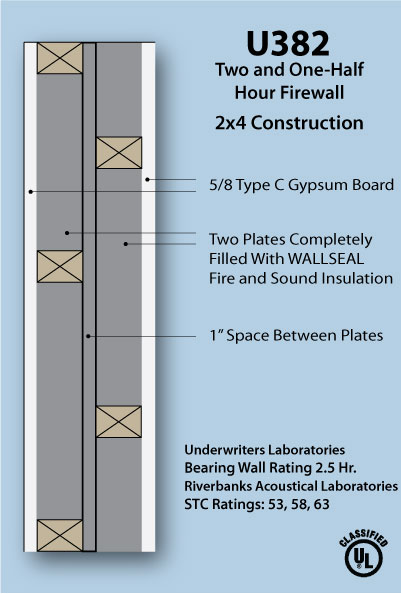
A 2-hour rating means the assembly survived a standardized fire test for 2 hours. The test follows ASTM E119 or UL 263. It is not about thickness alone. It is about a listed, tested system built as specified.
Know the terms. A fire wall (per code) creates separate buildings and is structurally independent. A fire barrier or fire partition is different and often what projects actually need. Your 2 hour firewall construction details must match the required wall type in the code analysis.
Continuity is critical. The wall must run from the foundation or floor to the roof or deck, with rated joints, edges, and penetrations. If any joint is unrated, the whole wall fails. This is the heart of 2 hour firewall construction details.
Personal tip: On a hospital project, our team passed the final only after we proved every joint had a listed system. The lesson stuck with me. Build the paper trail before you build the wall. These are non-negotiable 2 hour firewall construction details.
Codes, Listings, and Where to Find Approved Designs
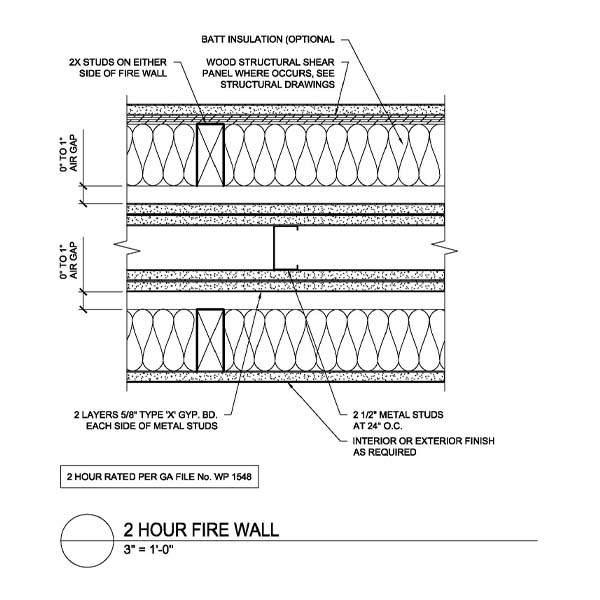
Always start with the building code in your jurisdiction, often the IBC. For fire walls, see NFPA 221. For life safety, NFPA 101 offers helpful context. The design must be a listed and labeled assembly from a recognized directory.
Use trusted listings. UL Product iQ and Intertek directories have hundreds of 2-hour wall designs. The Gypsum Association Fire Resistance Design Manual is a great reference for gypsum systems. Keep a submittal binder with the exact listing numbers and data sheets to back your 2 hour firewall construction details.
Common 2-hour examples many teams use:
- UL U419: Non-load-bearing steel studs with two layers of 5/8-inch Type X gypsum each side.
- UL U305: Wood studs with two layers of 5/8-inch Type X gypsum each side.
- Multiple UL U9xx designs for CMU walls; verify thickness and density.
Do not “mix and match” components. If the listing calls for 3-5/8-inch studs at 24 inches on center with specific screws and spacing, do that. Substitutions require an engineering judgment or an alternate listed system. This is a cornerstone of 2 hour firewall construction details.

Common 2-Hour Wall Assemblies and Key Specifications
CMU or Concrete Walls
CMU often achieves 2 hours with 8-inch normal-weight units. Lightweight units may need more thickness. Solid grouting or face shell integrity can change the rating. Check the listing for aggregate type and density.
For cast-in-place concrete, 2 hours depends on thickness and cover over reinforcing. Typical normal-weight concrete can achieve 2 hours around 5 inches, but always confirm with the listing or ACI-based tables.
Why it matters for 2 hour firewall construction details: masonry offers durability and impact resistance, but penetrations and joints still need listed systems.
Steel Stud with Gypsum (Non-Load-Bearing)
A common choice is steel studs with two layers of 5/8-inch Type X gypsum each side. Typical studs are 3-5/8 inches, 25 gauge, at 24 inches on center. Insulation may be optional depending on the listing.
Key details:
- Stagger board joints between layers.
- Use the exact screw type, length, and spacing from the listing.
- Use setting-type joint compound where required.
- Do not substitute Type C for Type X without listing support.
These are among the most used 2 hour firewall construction details for interior projects.
Shaft Wall Systems
Shaft walls use 1-inch gypsum shaftliner panels in C-T studs, with face layers on the tenant side. They are ideal around elevators and ducts. Many systems provide 2 hours with specific layer counts and fasteners.
Watch the jamb, corner, and floor interfaces. Follow the tested details. Shaft walls are a precise category within 2 hour firewall construction details.
Double-Stud or Staggered-Stud for Acoustics
Double-stud walls can deliver both a 2-hour rating and great sound control. Each side gets two layers of 5/8-inch Type X, and the cavity remains decoupled.
Coordinate door frames and backing. The extra width changes hardware and trim. It is a smart pick when your 2 hour firewall construction details also demand quiet rooms.
Doors, Frames, and Glazing
A 2-hour wall typically needs a 90-minute rated door and frame. Hardware must be listed and installed per NFPA 80. Fire-resistive glazing is limited by size and listing. Labels must remain visible.
This is where many inspections fail. The opening protection must match the wall rating rules. Keep this front and center in your 2 hour firewall construction details.

Step-by-Step 2 Hour Firewall Construction Details On Site
Use a tight sequence so the wall is right the first time.
- Preconstruction
- Pick the exact UL or Intertek design early.
- Get all submittals approved: studs, board, screws, insulation, firestop.
- Create a fire-rated wall log and marked plans.
- Framing
- Install the base and deflection track as specified.
- Frame at listed spacing, gauge, and height.
- Add listed backing where cabinets or rails will mount.
- Board Installation
- Hang the first layer horizontal; second layer staggered.
- Keep end joints offset at least one stud bay.
- Use listed screws and required patterns; do not overdrive.
- Joints and Finishing
- Tape and fill as required by the listing.
- Install control joints with a listed joint system if the wall requires movement joints.
- Continuity Checks
- Close tight to deck or slab edges.
- Install head-of-wall systems and edge seals per listings.
- Coordinate openings and firestop before closing the second side.
- Inspection and Documentation
- Photograph each layer before cover-up.
- Tag penetrations with the system number.
- Update the wall log daily.
Follow this workflow and your 2 hour firewall construction details will stand up to scrutiny.
Head-of-Wall, Joints, and Continuity Requirements
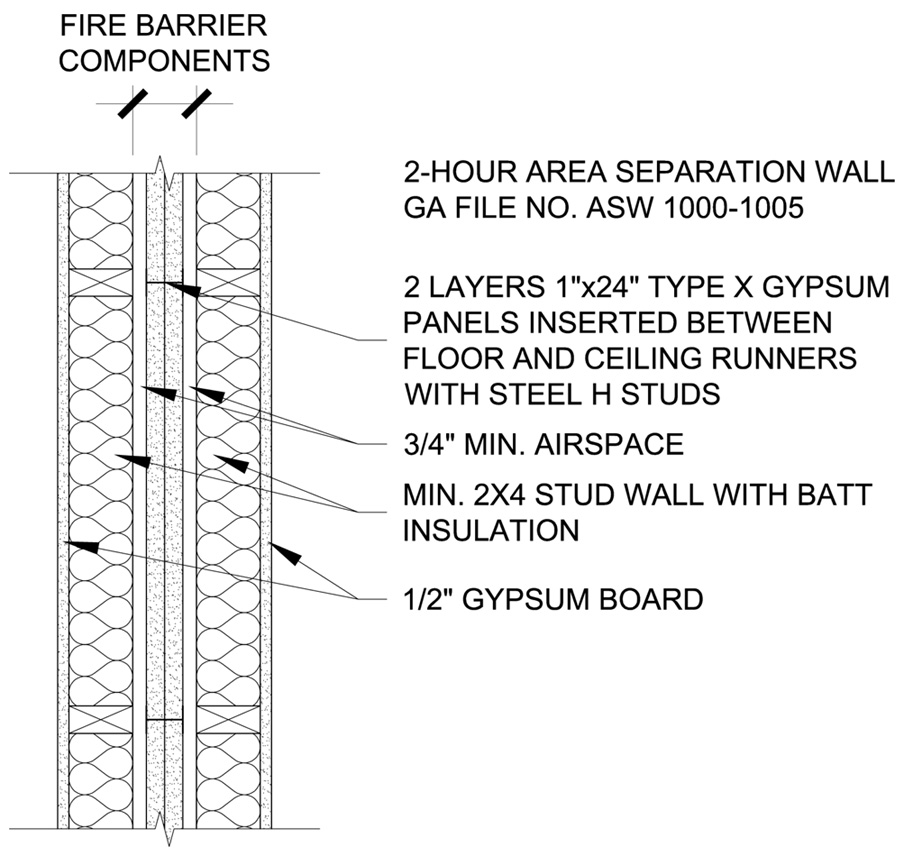
The head-of-wall is where many ratings fail. You must use a listed head-of-wall joint system, often mineral wool compressed in the gap with a fire-resistive sealant or spray. The listing will specify max joint width and allowable deflection.
Edges and perimeter joints need the same care. Use tested perimeter fire barrier systems at slab edges and around beams. If your wall meets a roof or deck, seal and secure it per the listing so heat and smoke cannot bypass the assembly.
Control joints are not just aesthetic lines. They break the gypsum and need a listed joint system to keep the rating. All these head, edge, and joint items are core 2 hour firewall construction details.

Penetrations, Firestopping, and Electrical/Openings
Every hole matters. Use a tested system for each penetration:
- Pipes and conduits: Choose a W-L or W-J system that matches the size, material, and annular space.
- Cables and trays: Select intumescent systems that allow future pulls with re-sealable devices.
- Ducts: Add fire dampers where required. Sleeve and seal per the listing.
Electrical boxes need special care. Use listed box types and putty pads as required. Keep required spacing between boxes on opposite sides of the wall. Avoid foams unless the listing permits them.
Doors and windows must be rated and labeled. Frames need fire-blocking and sealant that match the listing. Document every opening. These are high-visibility 2 hour firewall construction details and frequent inspection points.

Inspection, Testing, and Documentation You Need
Expect inspections for fire-resistive penetrations and joints. Many codes call for special inspection of firestopping by a qualified agency. Plan for it in the schedule.
Build a clean paper trail:
- Marked floor plans showing every rated wall and penetration.
- Submittal binder with listings and data sheets.
- Photo records at each stage: framing, first layer, second layer, joint treatment, firestop.
If you need a deviation, get an engineering judgment or a new listed system before you build it. That discipline defines successful 2 hour firewall construction details.
Cost, Schedule, and Value Engineering Without Losing Rating
You can save time without losing the rating. Prefab wall panels can speed mid-rise projects. Shaft walls reduce work from the shaft side. CMU is rugged for back-of-house zones, while steel stud walls are lighter and faster in fit-outs.
Avoid false savings:
- Swapping Type X for a different board without a listing.
- Changing stud gauge or spacing to “what we had in stock.”
- Using generic caulk instead of listed firestop.
Order rated doors, frames, and fire dampers early. Lead times can stall a job. Smart planning is part of strong 2 hour firewall construction details.

Common Mistakes and How To Avoid Them
I have seen good teams miss on small things. Fix these early:
- Missing head-of-wall joint system. Solve with listed mineral wool and sealant at the right compression.
- Stacked end joints in gypsum. Stagger layers and follow the pattern in the listing.
- Non-rated foam around pipes or boxes. Replace with listed firestop systems.
- Unsealed bottom track at slab gaps. Seal edges and joints with listed products.
- Wrong door label or hardware. Verify ratings and NFPA 80 installation.
A five-minute check can prevent a failed inspection. Keep a daily punch list tied to your 2 hour firewall construction details.
Maintenance and Field Modifications After Occupancy
Ratings can be lost after move-in. Tenants pull new cables, add outlets, and cut holes. Keep a penetration log and require listed firestop for every change.
Train facilities staff. Stock the right firestop kits. Schedule periodic wall walks to verify labels and seals. Long-term thinking is part of real-world 2 hour firewall construction details.
Frequently Asked Questions of 2 hour firewall construction details
What is the difference between a 2-hour fire wall and a 2-hour fire barrier?
A fire wall creates separate buildings and is structurally independent. A fire barrier separates spaces within a building. Both can be 2-hour, but the construction and continuity rules differ.
Can I change studs or board types if they seem equivalent?
Not without a listing that allows it or an engineering judgment. Follow the exact tested assembly to keep your 2-hour rating valid.
Do I need a 90-minute door in a 2-hour wall?
Typically yes, per common code rules and NFPA 80. Always verify with your project’s code summary and door schedule.
How do I handle head-of-wall gaps under a deflection track?
Use a listed head-of-wall joint system with mineral wool and fire-resistive sealant or spray. The system must match joint width and expected movement.
Are electrical boxes allowed in 2-hour walls?
Yes, with listed boxes, spacing, and putty pads as required. Use a tested assembly and maintain the spacing between boxes on opposite sides.
Conclusion
A dependable 2-hour wall is not just thicker materials. It is a tested assembly, built exactly as listed, with perfect continuity and documented firestopping. Start with the right listing, follow the details, and verify each step with photos and tags.
Put a simple system in place today. Pick your listing, build a wall log, and brief the team on penetrations and joints. If you want more guides like these 2 hour firewall construction details, subscribe, share this with your crew, or drop your questions in the comments.