RPA automates invoice capture, matching, approvals, and payments to cut costs and errors.
If you want fewer late fees, cleaner audits, and faster month-end close, you are in the right place. I have led several programs on accounts payable automation using RPA, from pilots to global rollouts. This guide explains what works, what fails, and how to build a reliable, scalable process that pays for itself.
What Is Accounts Payable Automation Using RPA?
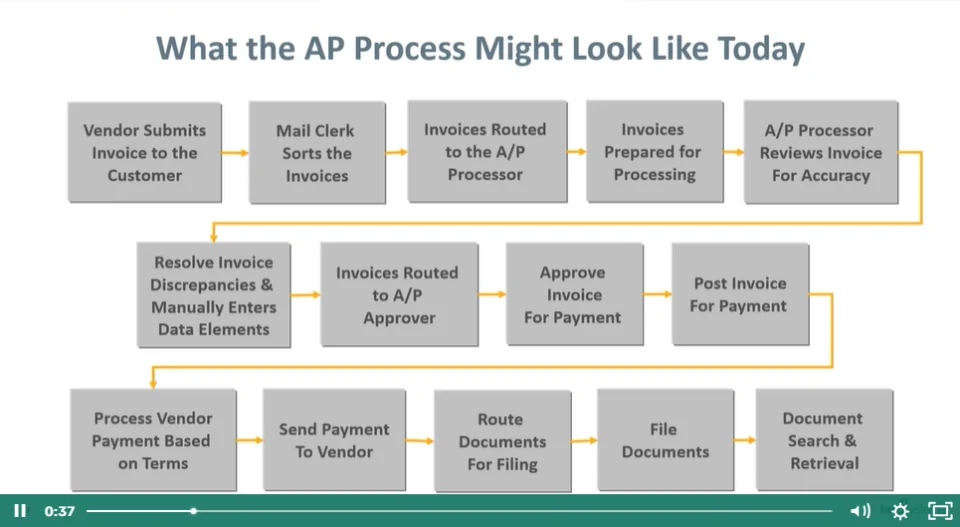
Accounts payable automation using RPA uses software bots to do routine AP tasks. These tasks include reading invoices, validating data, matching to POs, routing approvals, and posting to ERP. The bots mimic clicks and keystrokes, but they run rules with near-zero errors.
Think of it as a digital team that never sleeps. It helps you handle peak loads and closes gaps in manual handoffs. Accounts payable automation using RPA scales fast and works across tools you already use.
Why It Matters Now: Business Case and ROI
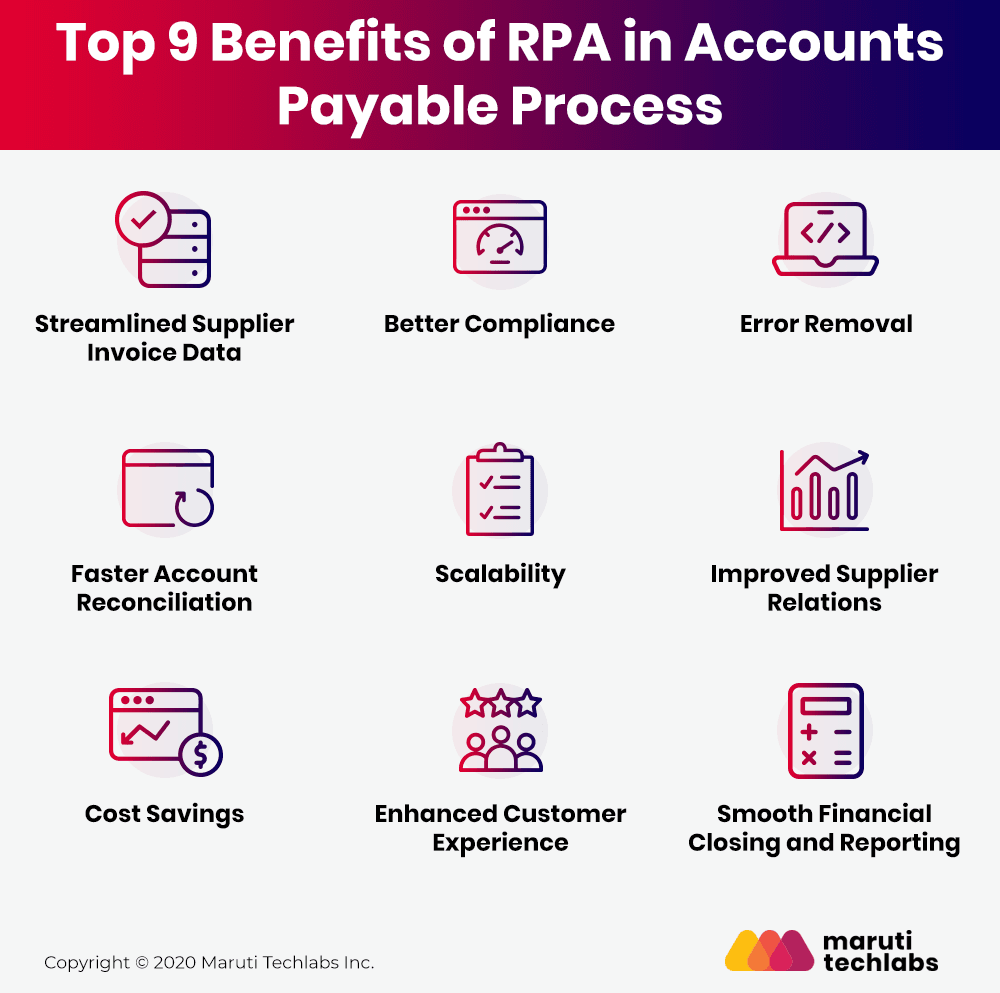
Manual AP is slow, costly, and risky. Industry benchmarks show the cost per invoice can sit between 12 and 20 dollars. With accounts payable automation using RPA, mature teams lower this to 2 to 5 dollars.
Cycle time often falls from 10 days to as low as 1 to 2 days. First-pass match rates can jump from about 55% to above 90%. This unlocks early payment discounts and reduces late fees. Accounts payable automation using RPA also reduces duplicate payments and fraud risk.
Core Building Blocks of an AP RPA Solution
A strong solution has a few key layers that work as one:
- Intelligent capture and OCR read invoices from email, EDI, or portals with high accuracy.
- Validation rules check vendor, PO, tax, currency, and required fields.
- Three-way match confirms PO, receipt, and invoice amounts within set tolerances.
- Approval workflows route exceptions and non-PO bills to the right people.
- ERP integration posts vouchers, updates GR/IR, and syncs vendor data.
- Audit and controls log every action for compliance and reviews.
Accounts payable automation using RPA brings these layers together. It blends speed with checks that protect cash and keep auditors happy.
How It Works: From Invoice to Payment
Here is the common flow I design for clients:
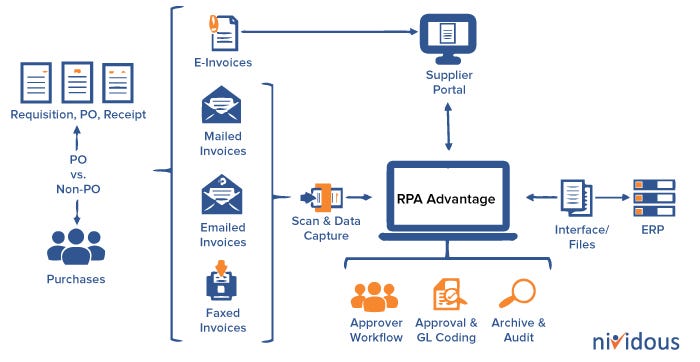
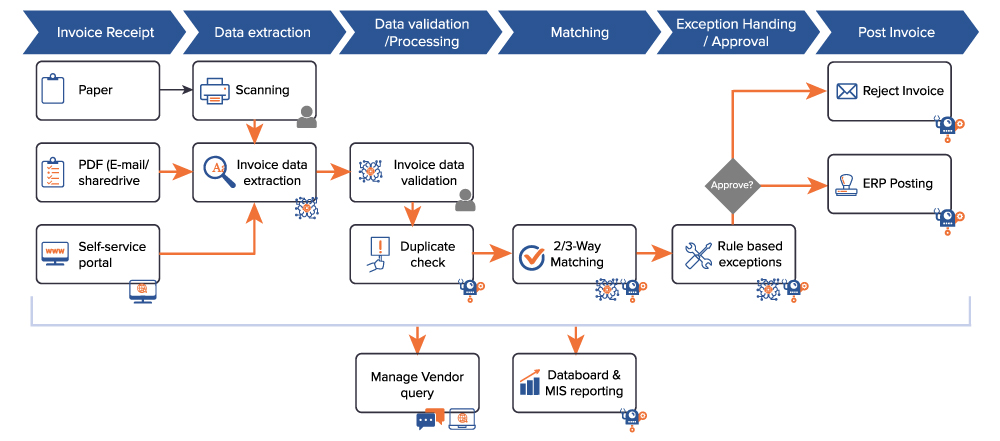
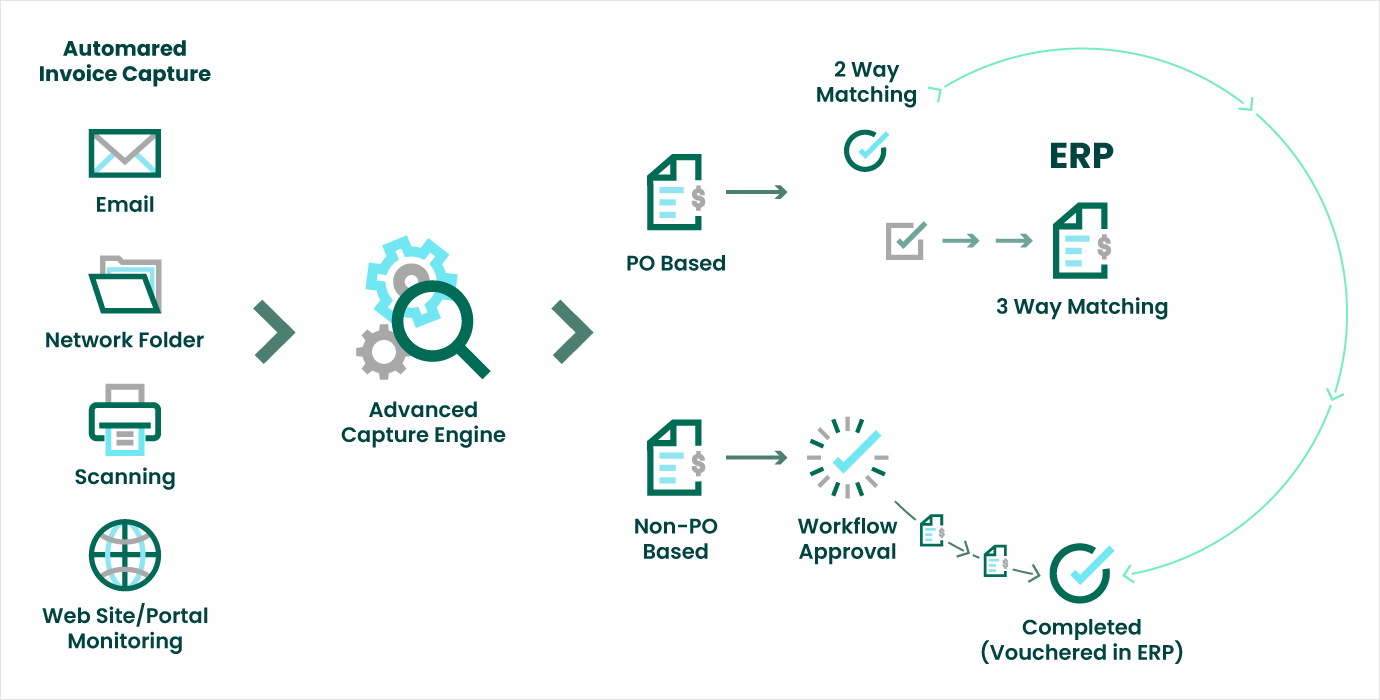
- Ingestion. Bots monitor a mailbox and a folder. They grab PDFs, images, and EDI files.
- Capture. OCR/IDP extracts header and line items. Confidence scores flag low-trust fields.
- Validation. Rules confirm vendor ID, PO, tax, currency, and duplicates.
- Matching. Bots run two-way or three-way match with set tolerances and tax logic.
- Approvals. Exceptions go to approvers with context and suggested fixes.
- Posting. Clean invoices post to ERP. Bots attach images and notes for audit.
- Payment. Bots create payment runs and update status back to the vendor portal.
The result is a touchless lane for clean invoices. Accounts payable automation using RPA routes only edge cases to humans.

Implementation Roadmap
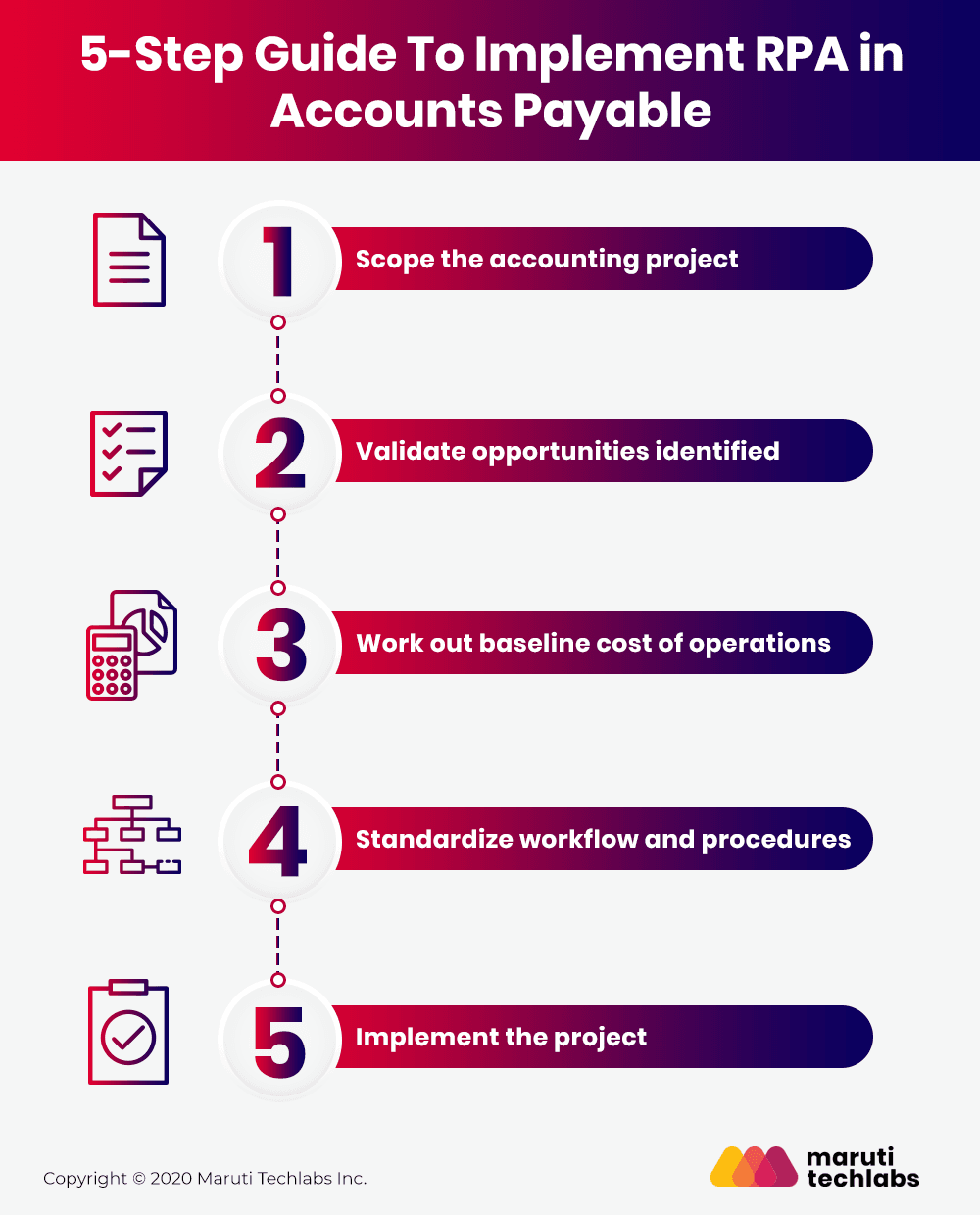
You can roll out accounts payable automation using RPA in stages. This plan works well in mid-market and enterprise settings:
- Assess. Baseline cost per invoice, cycle time, and match rates. Map AP variants by region and business unit.
- Design. Pick the top 3 to 5 use cases by volume and ROI. Define rules and tolerances.
- Build. Configure capture, bots, and ERP links. Create test data that mirrors real chaos.
- Test. Run day-in-the-life tests. Include rush orders, credits, and vendor changes.
- Change. Train approvers. Update policies. Adjust SLAs and cut-offs.
- Go live. Start with a pilot vendor set. Add waves by spend or geography.
- Scale. Add non-PO, T&E audits, and statement reconciliation.
I suggest weekly steering checks for the first eight weeks. Fix small issues fast so trust stays high.
Real-World Lessons Learned and Pitfalls
From my own rollouts, a few patterns stand out:
- Fix the vendor master first. Bad vendor data breaks matching and creates noise.
- Do not automate chaos. Standardize invoice formats and PO rules before scaling.
- Measure exceptions by type. Most issues come from 3 to 5 rule gaps. Tune those first.
- Keep humans in the loop. A clear queue and SLA for exceptions avoid backlogs.
- Plan for seasonality. Year-end and rate changes can spike volume. Bots need capacity plans.
At a manufacturer processing 40,000 invoices per year, accounts payable automation using RPA cut cost per invoice from 9.40 to 3.10 dollars in four months. First-pass match rose to 92%. The big win came from a simple change: align receipts to delivery dates to reduce mismatch.
Compliance, Risk, and Controls
Controls are not an add-on. Build them into the flows:
- Segregation of duties. Keep vendor edits, approvals, and payments apart.
- Audit trails. Log every bot and user action with timestamps and payload IDs.
- Fraud checks. Screen for duplicate invoices, vendor banking changes, and abnormal spikes.
- Tax and reporting. Validate VAT codes, 1099 flags, and withholding logic at capture time.
- Policy guardrails. Enforce approval limits and block split invoices meant to bypass limits.
Accounts payable automation using RPA makes audits smoother. You can hand auditors exact evidence and a clear trail in minutes.
KPIs and Continuous Improvement
Set targets early and track them weekly:
- Cost per invoice
- Cycle time from receipt to post
- First-pass yield and match rate
- Exception rate by type
- Early payment discounts captured
- Duplicate payment rate
Use process mining on event logs to find bottlenecks. Then tune rules, improve vendor guides, and refine match tolerances. Accounts payable automation using RPA improves most when you close the loop fast.
Technology Choices and Architecture
Your stack should be simple, secure, and open:
- RPA platform. Choose tools with strong queues, retries, and role-based access.
- IDP/OCR. Look for high accuracy on line items and multi-language support.
- Connectors. Native ERP connectors beat screen-scraping for stability.
- Cloud vs on-prem. Cloud speeds updates and scaling. On-prem can suit strict data needs.
- Security. Encrypt data, rotate secrets, and segregate networks for bots.
Accounts payable automation using RPA is not only the bots. It is the glue that links capture, rules, and ERP in a clean way.
Future Trends in AP Automation
The next wave is already here:
- Generative AI suggests fixes for exceptions and drafts reply emails to vendors.
- Autonomous matching learns from past approvals to adjust tolerances safely.
- E-invoicing mandates push structured data, which boosts touchless rates.
- Real-time payments close the loop with instant status and cash visibility.
Accounts payable automation using RPA will pair with AI to handle more edge cases. Teams will spend time on supplier health, not data entry.
Frequently Asked Questions of accounts payable automation using rpa
What is the difference between RPA and AP automation?
RPA is the engine that mimics clicks and keystrokes. AP automation is the full solution that blends RPA, capture, rules, and ERP to process invoices end to end.
How long does it take to see ROI?
Most teams see clear ROI in three to six months. Start with high-volume vendors and simple POs to speed results.
Do we still need humans in AP?
Yes, but fewer and in smarter roles. People handle exceptions, supplier care, and policy updates while bots do the routine work.
Will it work with my ERP?
Accounts payable automation using RPA works with major ERPs and many mid-market systems. Use APIs or native connectors for stable, fast posting.
How accurate is OCR for invoices?
Modern IDP tools reach high accuracy, often above 90% on header fields. Train models on your vendors to boost line-item precision.
What about compliance and audits?
The system keeps a full audit trail and enforces policy rules. This makes reviews faster and reduces findings.
Conclusion
Accounts payable automation using RPA turns a slow, manual cost center into a fast, data-rich function. It lowers costs, speeds cycle time, and strengthens controls. Start small, measure hard, and scale what works.
If you are ready, pick one flow, one business unit, and five vendors. Prove value in 90 days. Then expand with confidence. Want more guides like this? Subscribe, share your questions, or leave a comment with your AP goals.