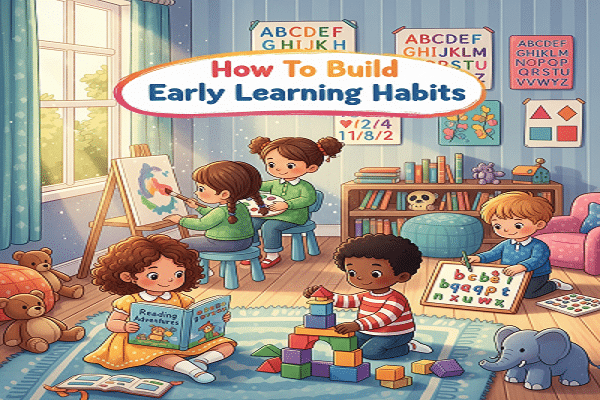
Model routines, make learning playful, read daily, and praise effort, not outcomes.
If you want to know how to build early learning habits that last, you are in the right place. I’ve helped many families lay strong foundations without stress or guilt. In this guide, I share clear steps, simple tools, and research-backed tips. You will learn how to build early learning habits with routines that fit real life and busy days.

Why Early Learning Habits Matter
Early habits shape how a child thinks, feels, and acts. Small daily actions add up. They build language, focus, and confidence. They also lower stress at home.
If you wonder how to build early learning habits, start with the brain. The young brain is eager. It forms new links with every story, song, and game. Research shows daily reading boosts vocabulary and school readiness. Warm back-and-forth talk improves self-control and social skills.
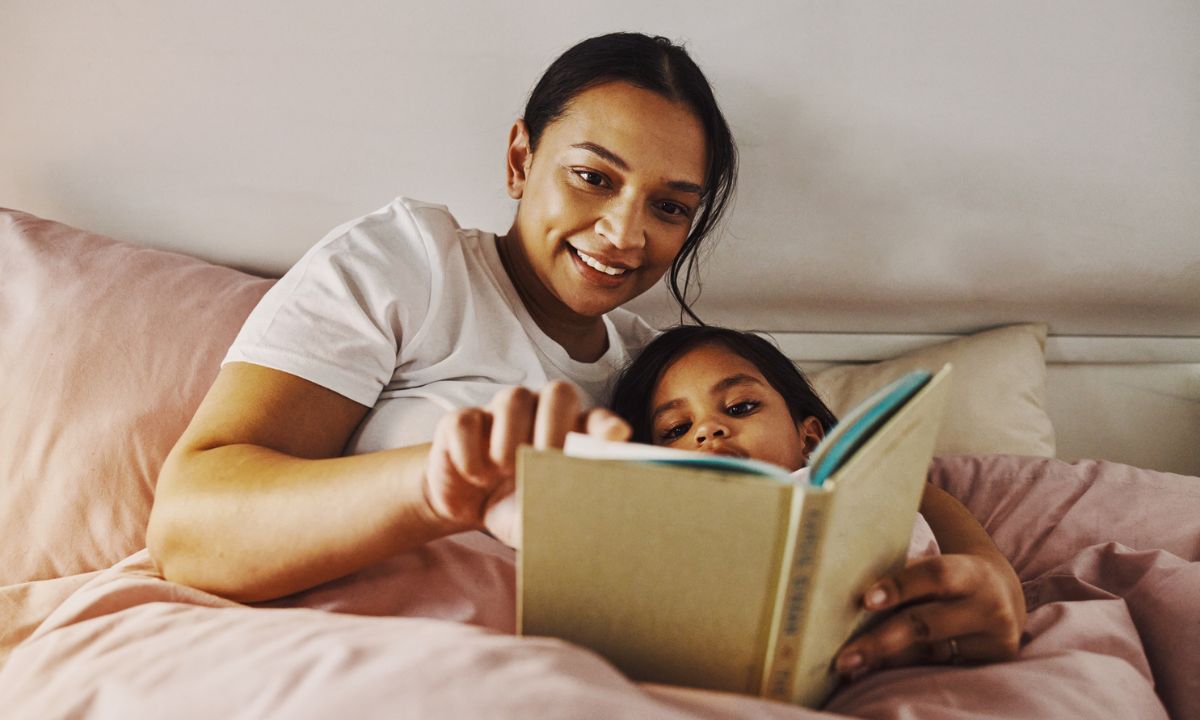
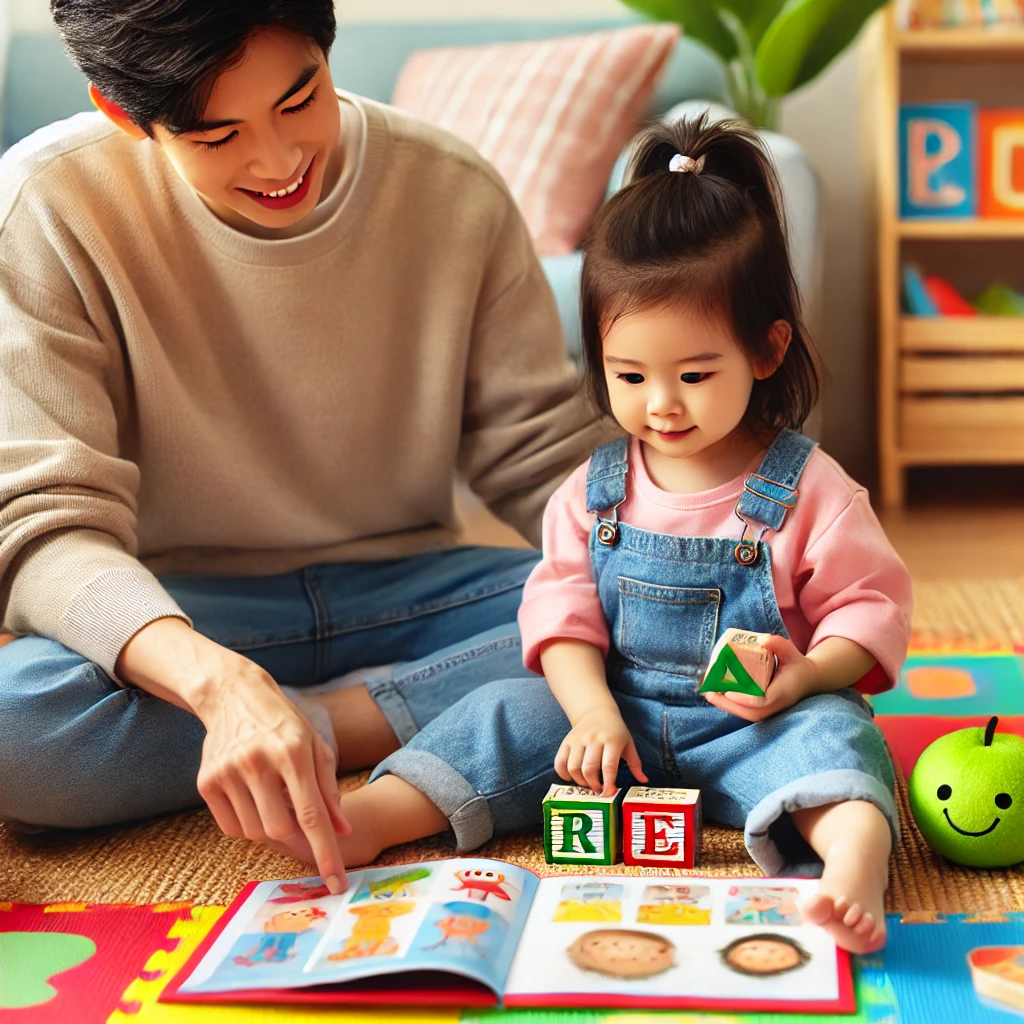
I have seen this in many homes. One family added ten minutes of “read and chat” before bed. In six months, their child asked more questions and used richer words. The habit was tiny. The impact was big.
Core Principles That Make Habits Stick
To learn how to build early learning habits, focus on simple rules that work.
Cues, routines, rewards
Make one clear cue. Tie the habit to a time or place. Keep the routine short. Give a small reward. A cuddle or a sticker is enough.
Tiny beats perfect
Start small. Two minutes of reading is fine. Set the bar low so you can win often.
Make it fun
Play is the work of childhood. Turn chores into games. Turn practice into play.
Praise effort
Praise what the child does, not who they are. Say, “You tried a hard puzzle.” This builds a growth mindset.
Model and repeat
Kids copy what they see. Read in front of your child. Ask curious questions. Repeat the routine at the same time each day.
Step-by-Step Plan: How to Build Early Learning Habits at Home
If you ask how to build early learning habits and keep them, follow this plan. It is simple and proven.
-
Pick one skill
Choose one focus for two weeks. Reading aloud. Talking during meals. Sorting objects by shape. Keep it narrow. -
Anchor to a stable moment
Tie the habit to a daily cue. After breakfast. During bath time. Before bed. The cue does the heavy lifting. -
Make it two minutes
Start with a two-minute version. Read one page. Sing one song. Sort five blocks. Win early and often. -
Use a visual reminder
Place a book on the pillow. Put crayons in a clear cup on the table. Make the habit hard to miss. -
Add a fun closer
End with a small joy. A high-five. A dance. A sticker. This keeps the loop strong. -
Track wins
Use a simple chart. Mark each day with a star. Kids love to see progress. So do adults. -
Build slowly
After seven days, add one minute. Or add a second cue. Do not add too much at once. -
Share the plan
Tell other caregivers. Keep the steps in one place. Post it on the fridge. Consistency builds speed. -
Review weekly
Ask, “What worked? What was hard?” Adjust the cue or time. Keep the habit tiny and fun. -
Celebrate streaks
When you hit five days, cheer. When you hit ten, add a new book or game. Reward the process.
This is how to build early learning habits without stress. Small steps. Clear cues. Warm praise.

Daily Routines That Prime the Brain
You can weave learning into your day. This is how to build early learning habits that feel natural.
Morning
Set a bright tone. Use a word of the day. Ask one “why” question at breakfast. Keep it light and short.
Commute or walk
Talk about what you see. Count red cars. Name shapes on signs. Sing call-and-response songs.
Meals
Do rose-bud-thorn. A rose is a good thing from the day. A thorn is a hard thing. A bud is what you hope for. This builds talk and feelings.
Bath and bed
Do rhyme play in the bath. Read two pages at bed. Ask one question about the story. Then lights out.
These small slots are gold. They show how to build early learning habits inside what you already do.
Tools, Toys, and Media That Help (and Hurt)
You do not need fancy gear to build strong habits. Here is how to build early learning habits with smart tools.
Helpful
- Board books and picture books with clear images and simple plots
- Open-ended toys like blocks, cups, scarves, and play-dough
- Crayons, paper, child-safe scissors, and tape for fine motor play
- Music and stories you can sing and act out
- A small timer to keep sessions short and fun
Use with care
- Screens can teach, but they can also crowd out talk and sleep
- Choose high-quality shows and watch together
- Keep screens off during meals and one hour before bed
A note from my work with families. One parent swapped twenty minutes of random videos for ten minutes of co-viewing an educational show and ten minutes of pretend play. The child’s play talk grew fast. Co-play beats solo screen time.
Motivation and Mindset for Parents and Caregivers
Learning starts with you. Your calm energy sets the tone. Here is how to build early learning habits while staying kind to yourself.
Make it fit your life
Pick times that work for your home. Protect sleep. Keep weekends flexible. Flex builds trust.
Drop the guilt
Miss a day? Smile and reset. Habits are averages, not streaks. Progress beats perfection.
Use the “two yes” rule
Say yes to the goal and yes to your limits. For example, “Yes, we will read. Yes, it will be one page tonight.”
Share the load
Invite siblings, grandparents, and teachers. Ask them to use the same cues. Many hands make light work.
Common Challenges and How to Fix Them
Every family hits bumps. This is how to build early learning habits when life gets messy.
No time
Shrink the habit. Use micro-moments. Read one page in the bathroom line. Count steps on the stairs.
Child resists
Offer choice. “Do you want to read on the couch or the rug?” Keep the routine short. End with a win.
Too much screen pull
Set a screen parking spot. Plug in devices in one place. Keep that space away from bedrooms and tables.
Caregivers not aligned
Make a one-page plan. Share cues, tools, and goals. Review on Sundays. Adjust as a team.
Boredom
Rotate toys and books. Put out three items. Put the rest away. Swap weekly to keep things fresh.
Tracking Progress and Adjusting the Plan
What gets tracked gets done. This is how to build early learning habits and see results.
Use a simple chart
Make a seven-day grid. Add a star for each day you do the habit. Aim for five out of seven days.
Watch for signals
Is your child more curious? Do they use new words? Do they stay with tasks longer? These are signs of growth.
Adjust with care
Change one thing at a time. Move the cue. Shorten the routine. Try a new reward. Wait a week and review.
Stack new habits
Once the first habit is stable, stack another. After reading, add two minutes of drawing. Keep both tiny and fun.
Share wins
Tell your child what you notice. “You stuck with that puzzle.” Joy fuels the next step.
Frequently Asked Questions of how to build early learning habits
What age should I start building learning habits?
You can start from birth with talk, songs, and cuddle time. Keep it warm, short, and responsive to your baby.
How long should daily learning sessions be?
Two to ten minutes is enough for young kids. Short, frequent sessions beat long ones.
What if my child refuses to join?
Offer a choice and keep it playful. Switch time of day or change the activity shape, not the goal.
Are screens always bad for early learning?
No. Co-viewing and short, high-quality content can help. But real talk and play teach more.
How can working parents find time?
Use anchor points you already have. Bedtime, meals, and commute moments are perfect two-minute slots.
How do I know if a habit is working?
Look for small changes in attention, words, and curiosity. Track days completed and note a weekly win.
Can I build more than one habit at once?
Start with one. After it feels easy for a week, add a second tiny habit.
Conclusion
Strong learning starts with small daily wins. You now know how to build early learning habits with clear cues, tiny steps, and warm praise. Keep it fun. Keep it short. Keep it steady.
Pick one two-minute habit today. Place a cue where you will see it. Celebrate the first five days, then build from there. If this guide helped, subscribe for more simple, research-backed tips, and share your first habit win in the comments.